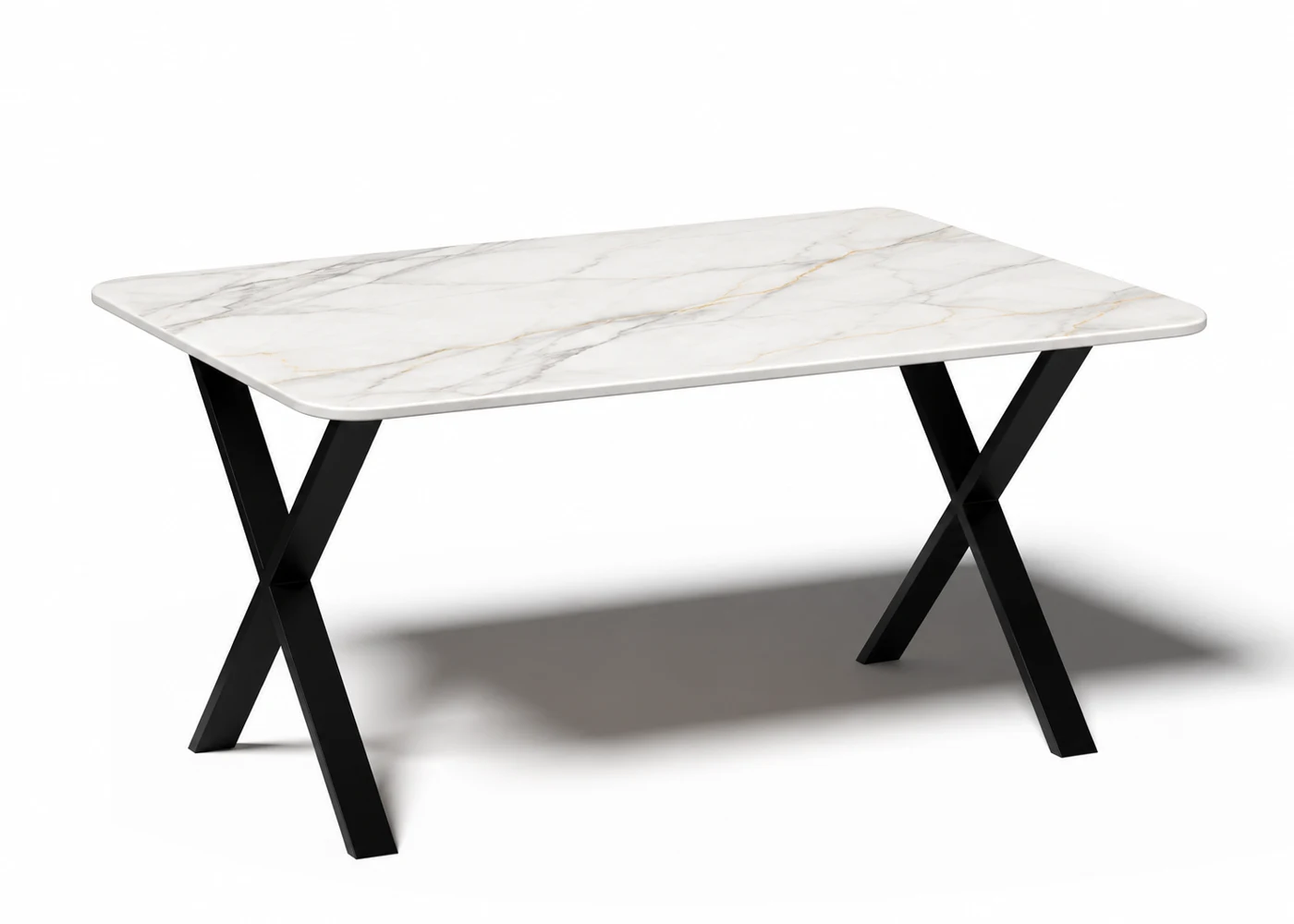
Spider and X are two different ways to frame a stone tabletop. Choose the base with your chairs and room layout in mind, then refine the top.
The Spider form
Our proposed Spider table uses a central steel base with radiating arms. It creates one visual centre beneath the top. Check where the feet and arms sit relative to the chairs you want to use; a central base is not automatically clear of every seating position.
The X form
The X table has two crossed supports positioned towards the ends. Its repeated diagonal lines give the table a more graphic outline. For end seats, consider the distance from the tabletop edge to the nearest support and how far a chair needs to slide in.
A practical room check
Mark the proposed tabletop footprint on the floor with removable tape. Put your existing chairs around it and walk the routes you use most: from the kitchen, past a doorway and behind someone seated. Then compare two sizes in the same space. This is a layout exercise, not a structural test.
Our planner offers 160 × 90, 180 × 90 and 200 × 100 cm as starting enquiries. A size appearing in the planner does not confirm a tested base-and-top combination. Final support, mounting and finished height are reviewed together.
Bring the chairs into the brief
Include chair width, armrest height if relevant, and your preferred seating arrangement. A photograph or sketch can help during the later specification stage. Record the details in the project notes and send your enquiry, or download a copy of the brief.
Finish with the stone
Choose a design you enjoy both close up and from across the room. A strongly veined top and an angular base can create a bold focal point; a quieter design lets the steel silhouette take more attention. Neither choice is universally better — it depends on the room you are making.
By FORM & VEIN. Planning guidance for the proposed collection; availability and final specifications require confirmation.
Prepare your project brief ↗